

Your cart is currently empty.
Discover our products.
27 May 2022
The history of the Portuguese national team isn’t built solely on legendary players and unforgettable matches — it’s also shaped by the coaches who, over more than a century, have led the team with vision, strategy, and passion.
From its early steps in 1921 to the European triumphs of the 21st century, each coach has left a distinct mark, contributing to the evolution of Portuguese football in their own way.
In this article, we’ll explore the key figures who have guided Portugal, their most significant achievements, and the moments that helped define the Portuguese national team’s journey.
Between 1921 and 1966, Portugal experienced a phase of growth and identity-building. The first official coach was António Ribeiro dos Reis, who also played in Portugal’s debut match. In 1925, he led the team to its first official victory — a 2-1 win over Italy.
But it was Cândido de Oliveira, affectionately known as “Mestre,” who stood out during this era. A journalist and coach, he guided Portugal to the quarter finals of the 1928 Olympic Games in Amsterdam and recorded 6 wins, 9 draws, and 13 losses across multiple stints with the team.
Other names like Tavares da Silva, Maia Loureiro, and Laurindo Grijó also contributed, with Tavares earning 10 wins and achieving milestones such as Portugal’s first victory over Spain and its first win abroad (against Ireland).
Between 1950 and 1966, Portugal had eight different coaches, but it was Manuel da Luz Afonso and Otto Glória who led the team to its first major international tournament: the 1966 World Cup in England.
Otto Glória, a Brazilian coach, and Luz Afonso — who boasted an impressive 75% win rate (15 wins in 20 matches) — guided Portugal to a historic third-place finish, with Eusébio as the standout star. José Maria Antunes also deserves recognition for giving Eusébio his first international cap.
Not quite. This period was marked by frequent coaching changes and few qualifications. Still, there were bright moments, such as the second-place finish at the Brazil Independence Cup in 1972 under José Augusto.
In 1984, Fernando Cabrita led Portugal to the European Championship in France, defeating the Soviet Union in qualifying. José Torres built on that momentum and took the team to the 1986 World Cup in Mexico.
In the following years, coaches like Ruy Seabra, Juca, António Oliveira, and Artur Jorge tried to bring Portugal back to the big stage. Oliveira managed to qualify the team for Euro 1996, but Portugal was eliminated in the quarter finals by a memorable lob from Poborsky.
From 1999 onward, Portugal entered a new era of stability and success. Humberto Coelho kicked off this phase with a strong qualifying campaign for Euro 2000, where Portugal staged a historic comeback against England.
The team’s elegant playing style, dubbed “poetic football,” reignited national enthusiasm. António Oliveira returned and qualified Portugal for the 2002 World Cup, but the campaign in Japan and South Korea ended in disappointment.
Luiz Felipe Scolari, from Brazil, took charge of the Portuguese national team for Euro 2004, hosted in Portugal. He placed his faith in a young Cristiano Ronaldo and led the team to the final, where they lost to Greece.
During his five-year tenure (2003–2008), Scolari oversaw 74 matches, earning 42 wins and securing qualifications for both a European Championship and a World Cup.
Carlos Queiroz returned to the Portuguese national team and qualified Portugal for the 2010 World Cup, where the team recorded its biggest-ever win in a major tournament — 7-0 against North Korea. Paulo Bento succeeded him and secured spots at Euro 2012 and the 2014 World Cup.
After the 2014 World Cup, Fernando Santos was appointed head coach. With a solid résumé and a pragmatic approach, Santos transformed the team and led Portugal to victory at Euro 2016, thanks to Éder’s unforgettable goal in the final against France.
In 2019, Santos lifted another trophy, winning the inaugural UEFA Nations League at Estádio do Dragão. With 89 matches and 54 wins, he remains the most successful coach in the history of the Portuguese national team.
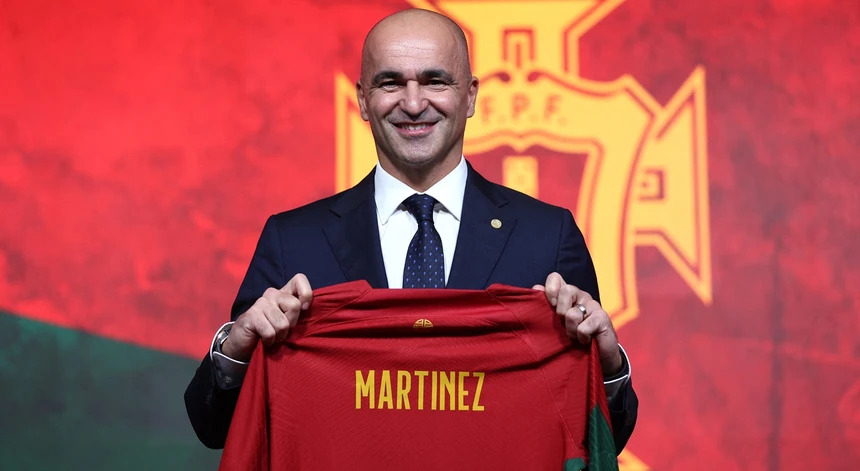
Following Portugal’s exit from the 2022 World Cup, Fernando Santos was succeeded by Roberto Martínez, making him the third foreign coach in the team’s history. With international experience and a modern approach, Martínez was tasked with preparing Portugal for future challenges and keeping the team among the world’s elite.
His leadership has already delivered results: in June 2025, Portugal won the second edition of the UEFA Nations League, defeating Spain in the final and reaffirming its status as one of the most competitive national teams in the world.
Every coach has played a role in shaping the identity of Portuguese football. Some brought historic victories, others introduced distinctive styles — but all left their mark.
Want to celebrate the journey of the Portuguese national team and show your support? Visit Portugal Store and explore official merchandise that honors the greatest moments and the leaders who made history with Portugal.