


Women's Futsal: Find out everything you don't know
Women's futsal has been growing in popularity in Portugal and around the world. Learn all about women's futsal and its players here!
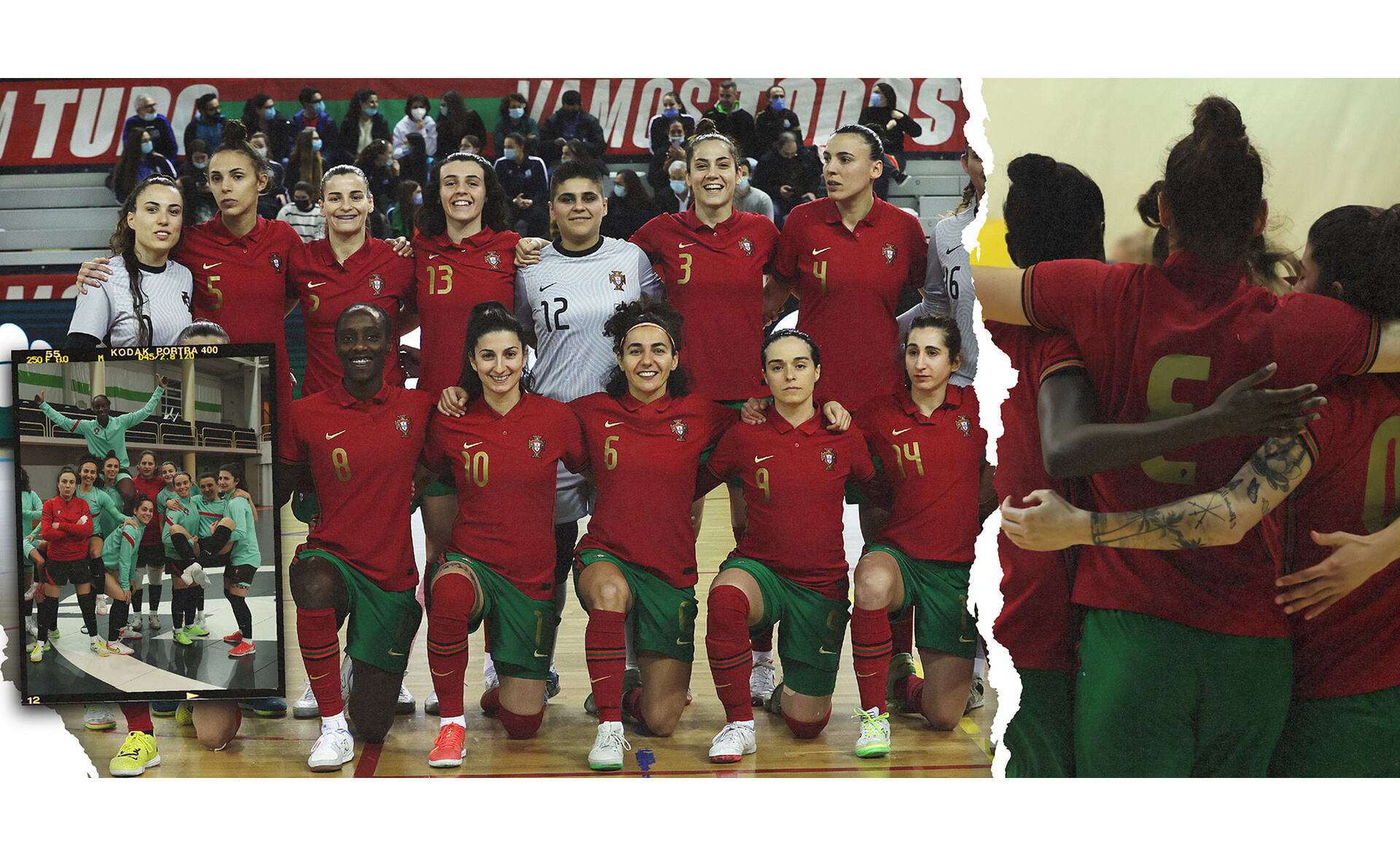
Much like what happened with Football, when Uruguayan Physical Education teacher Juan Carlos Ceriani Gravier laid the foundations for what would become Futsal as we know it today back in 1933, men held the exclusive rights to its practice.
As has happened in so many other areas of society, women's Futsal had to travel a long road before earning its place in the sun. One only needs to look at the history of women's Futsal when it comes to World Championships and European Championships.
Women's Futsal: History
While the first prototype of a men's Futsal World Championship was held in 1971 (Mexico) and the first FIFA Men's Futsal World Cup in 1989, women's Futsal players around the globe had to wait until 2010 for the opportunity to compete for the most coveted national team trophy.
Spain had the honour of hosting the inaugural edition of the so-called "Women's Futsal World Tournament" — a competition that featured eight national teams from four confederations and that would end with a final between Brazil and Portugal.
Held on an annual basis, these world tournaments would see five further editions through to 2015, all sharing two common denominators: victory for the Brazilian national team.
In 2019, the governing body for European Futsal staged the first edition of the UEFA Women's Futsal Euro, a competition organised in Portugal (Gondomar) that ended with the Spanish national team's victory over the Portuguese side.
Recognising not only the excellent organisation of the first European Championship, but also the contribution that the FPF has made to the development of women's Futsal in Portugal, UEFA decided to award Portugal the second edition of the competition, to be held between 1 and 3 July 2022, once again in the city of Gondomar. This European Championship, played in a "final-four" format, will feature Portugal, Spain, Russia and Ukraine.
History of Women's Futsal in Portugal
Despite the Portuguese women's Futsal team being one of the strongest in the world — as we will see further on — the first records of an official national competition only date back to 1996.
Held between 1996 and 2013, the so-called Senior Women's National Futsal Cup was a competition organised by the FPF, contested by the winners of district championships and the runners-up from the best-placed football associations.
In the 2013-2014 season, the FPF decided to restructure the competition, and thus the National Women's Futsal Championship was born. After an initial phase in which teams were divided into North Zone and South Zone, the top four from each zone came together in a second phase to determine the champion, played in a mini-league format of two rounds. The first Portuguese Women's Futsal club champion was CR Golpilheira. GD again, FC Vermoim and Benfica (four titles) are the teams that, to date, have managed to be crowned national Women's Futsal champions. It is also worth noting a change in the championship format for the 2021-2022 season, with the end of the zonal division.
Although we cannot yet shout "Portugal are Women's Futsal World Champions!" or "Portugal are back-to-back Women's Futsal European Champions!" as is the case in Men's Futsal, these and other club teams are the breeding grounds from which women's futsal players have emerged — players who, in the tradition of Ricardinho and Zicky Té, place Portugal at the top of women's Futsal worldwide.
Fifó, one of the few Portuguese women's Futsal players to play abroad professionally, Pisko and Ana Catarina are among those names who, at the first Women's Futsal European Championship held in Gondomar, guided Portugal to the silver medal.
Although some of these stars have not yet had the opportunity to perform at a Women's Futsal World Championship, their predecessors managed — beyond the aforementioned second place at the first World Tournament held in Spain (2010) — to reach the final on two further occasions, one of which was during the 2012 World Tournament held in Portugal (Oliveira de Azeméis) in front of around 5,000 spectators.