

Your cart is currently empty.
Discover our products.
3 October 2022
The history of the Portuguese Football Federation (FPF) has always been tied to the green and red of the Portuguese flag. However, if the FPF had been founded in the late 19th century, like its English counterpart, the national team’s colors would have been different. The evolution of the national flag reflects the country’s history and the political transformations over the centuries.
Over Portugal’s nearly 900-year history, the national flag has undergone several changes, always influenced by the political and cultural contexts of each era. The first flag, created by King Afonso Henriques, featured a blue cross on a white background with bezants, symbolizing the right to mint coins and reinforcing the power of the newly formed Kingdom of Portugal.
During the reign of King Sancho I, the five shields (quinas) emerged, which remain to this day. Later, the red border adorned with golden castles—representing the fortresses conquered in the Algarve—and the armillary sphere, symbolizing the Age of Discoveries, were added. These changes reflected territorial conquests and the growing power of the kingdom. The blue and white flag remained until the establishment of the Republic on October 5, 1910, when the transition to the green and red we know today took place.
The current Portuguese flag was adopted on June 30, 1911, after the Republican Revolution. The choice of colors was not random but the result of a careful decision by the Flag Commission, which included notable figures such as Columbano Bordalo Pinheiro, Abel Botelho, and João Chagas. This commission was tasked with creating a symbol that would represent the country’s new political phase and reinforce republican ideals.
- White: Occupying the central area of the flag, it houses the five shields (quinas). According to the Commission, it is a “fraternal color in which all others merge, a color of simplicity, harmony, and peace.” The continuous presence of white in the national flag since the monarchy justified its retention. Additionally, it represents tradition and the continuity of national identity.
- Red: Associated with courage and struggle, it is described as a “combative, warm, and virile color par excellence.” Its symbolism reinforces the connection to the bloodshed by the Portuguese in battles and their victories in decisive moments of national history. This color is also linked to the revolutionary movements that led to the fall of the monarchy.
- Green: Known as the color of hope, it also represents progress and the future. It was chosen due to its association with the Republican Revolution of 1910, in which it stood out alongside red, being prominently displayed during the transition to the new political order. For many, green also symbolizes Portugal’s natural landscapes, reinforcing the people's connection to their land.
Beyond its colors, the Portuguese flag includes traditional and historical elements:
- Armillary sphere: A symbol of the Age of Discoveries, representing the adventurous spirit and Portuguese maritime expansion, it serves as an emblem of the country’s historical grandeur. The armillary sphere was an essential navigation instrument during the Discoveries, a period when Portugal was a global leader.
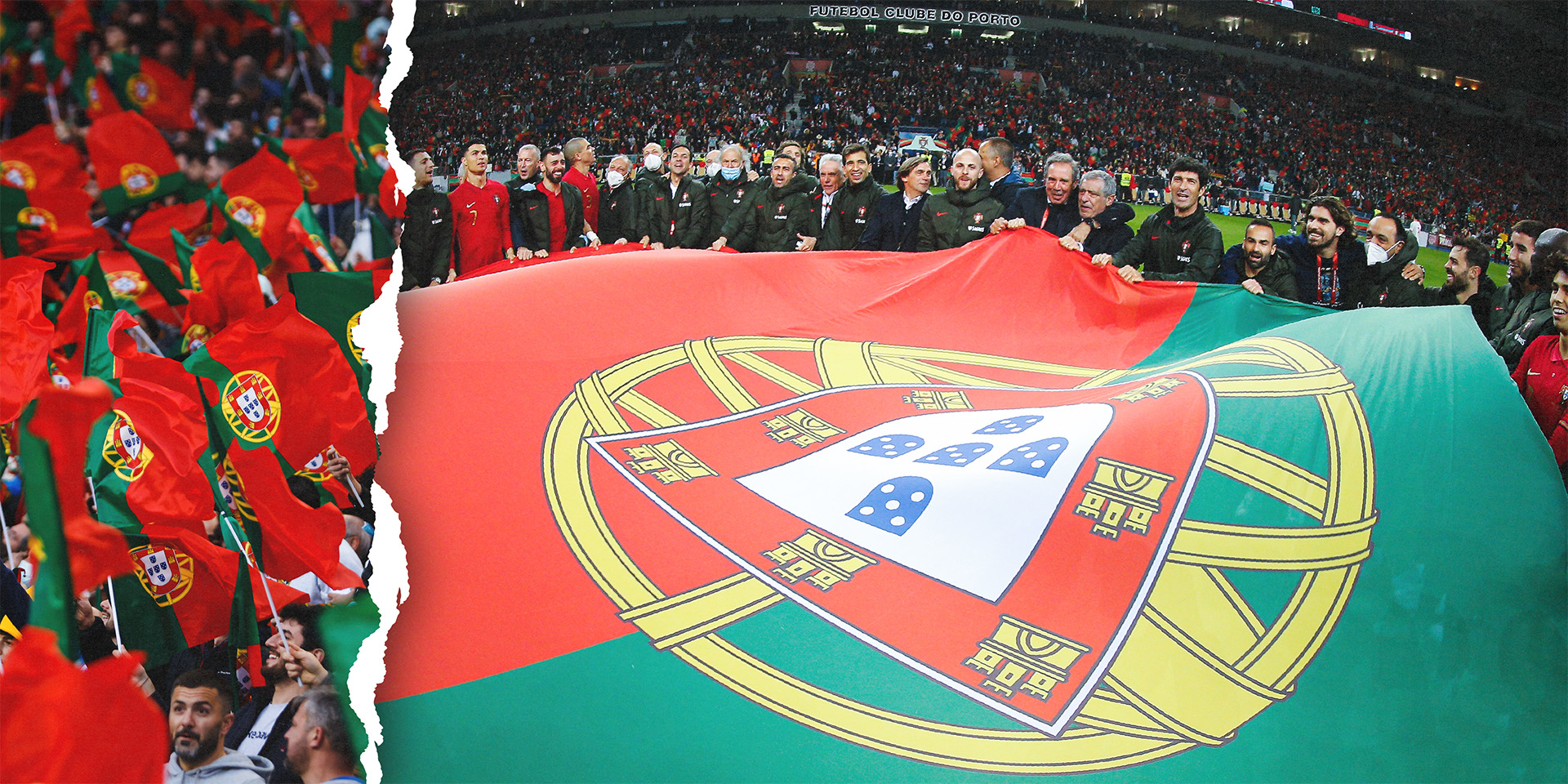
- White shield with five blue quinas: The central element of the flag, linked to the founding of the nation and the conquests of King Afonso Henriques, symbolizing Portuguese identity. The five shields contain bezants, alluding to the king’s right to mint coins, a sign of sovereignty.
- Seven golden castles: Represent the fortresses conquered during territorial expansion and resistance against the nation’s enemies. These castles evoke the Portuguese struggle against invading forces and reinforce the spirit of national resistance.
To ensure the correct representation of the Portuguese flag, it is essential to follow official specifications:
- The length is one and a half times the height.
- The green occupies two-fifths, and the red covers the remaining three-fifths.
- The central emblem must fill half the height of the flag and be equidistant from the top and bottom edges.
Since Euro 2004, when coach Scolari encouraged the Portuguese to display the flag, this national symbol has gained even more significance. Today, the Portuguese flag remains an emblem of national pride, present at sporting events, celebrations, and even in fashion.
The Portuguese flag is not just a political symbol but also an element of cultural identity. It is present in moments of glory and perseverance, such as the triumphs of the National Team in international competitions. Additionally, it has been used as a symbol of unity among Portuguese people, whether in the country or abroad.
The national flag’s popularity has increased in recent years, driven by growing patriotic sentiment and the appreciation of Portuguese culture. Through the match kits, the Portuguese can wear the country’s flag and proudly showcase their national pride. These products help strengthen the emotional connection between citizens and their national symbols and history.
Today, the Portuguese flag is displayed with respect and admiration, serving as a reminder of the country’s rich historical heritage and its place in the world. Whether in sports, politics, or culture, the flag continues to reflect Portuguese identity and spirit.
With the official match kits and scarves, all Portuguese people can celebrate and proudly display the flag of Portugal, keeping the tradition and meaning of this national symbol alive.