

Your cart is currently empty.
Discover our products.

6 April 2022
The history of futsal has a lot to tell. Born in South America, futsal is a successful sport in most countries, but also in Portugal! With consecutive victories, and an excellent team, the history of Futsal in Portugal is an increasingly talked about topic.
However, if you think that the country that gave the legendary player Falcão (Brazil), idol of great futsal players like our Ricardinho, to the "courts" is the motherland of Futsal, make no mistake, the History of Futsal is different.
Futsal History
Futsal was not born in Brazil, but the cradle of the sport is not far away. Three years after having hosted the first Football World Cup, Uruguay once again made its mark on the history of futsal, but this time a smaller one played in rings and pavilions.
In 1933, Juan Carlos Ceriani Gravier, a physical education teacher at the Christian Youth Association in Montevideo, the capital of Uruguay, created the practice due to the difficulty he was having finding football pitches. In this first incarnation of what would later become futsal, Gravier began by improvising games on basketball and hockey fields, taking advantage of the goalposts used in the latter sports.
With a worldwide following over the years, futsal gradually became one of the most popular games with sports fans.
Futsal History in Portugal
The origin of Futsal in Portugal dates back to the end of the 80s of last century, when, especially in the summer, large indoor football tournaments were held. This seasonality and organizational decentralization would, after a conversation between some of the participants in these summer tournaments who equated the possibility of organizing competitions (tournaments) where the rules were the same and the product of the organization was for the benefit of all, give rise to the first associations at a national level: Porto, Lisbon and Minho.
The first congress of the sport ended up taking place on 8 November 1986 in Porto by the hand of the Associação de Futebol de Salão do Porto (AFSP). This 1st Congress of Futebol de Salão Associations in Portugal was attended by representatives of the Porto, Minho, Ribatejo, Aveiro and Lisbon Associations. The creation of the Portuguese Indoor Football Federation (FPFS) was also approved in this meeting. It was also discussed the fact that the AFSP would centralize the results of the 1st National Indoor Football Championship, as it was the only one with a telex.
Important faces of the sport in Portugal were part of this first version of the FPFS, namely Paulo Relógio (at the time, President of the Players' Union) and José Eduardo (ex-Professional Footballer), as well as collaborators of the calibre of Rui Tovar, Fernando Correia and Eusébio.
A few months after the legalization of the FPFS, the 1st National Indoor Football Championship took place, an event that was won by Grupo Desportivo "Os Académicos", from Oporto. Besides being the "cradle" of Futebol de Salão in Portugal, through its regional association, Porto hosted, in 1990, the European Championships of the sport that culminated in the national team winning the title.
Birth of Futsal: the integration of Futebol de Salão into the Portuguese Football Federation
The year 1990 would be decisive in the history of Futsal in Portugal. After the European title won in Porto, the FPFS decided to abandon the practice of Futebol de Salão and immediately created the Portuguese Futsal Federation, an entity that would immediately be integrated into the Portuguese Football Federation (FPF).
Alongside this real revolution, the first year of the 90s also brought the first national championship of the sport played under the new rules stipulated by the Portuguese Football Federation, such as the increase in the size of the ball, the permission to play inside the goal area, the introduction of individual fouls and cumulative fouls, the introduction of the double penalty (12m free kick, now 10m free kick), substitutions instead of stopping the game and the possibility of the goalkeeper leaving the area (and playing the ball for 4 s).
The winner of this first Portuguese Futsal Championship was Sporting Clube de Portugal, a team that leads the ranking of championships with 15 titles won, followed by Benfica with 8, Miramar and Correio da Manhã, mythical teams of Portuguese Futsal with 2 and Santos Venda Nova and Freixieiro with 1.
From 1990 onwards, other alterations to the rules appeared, always aiming to provide a more and more spectacular, attractive and offensive sport, characteristics that end up making Futsal in Portugal the second most played sport in our country.
Achievements of the Portuguese Futsal National Team
International victories are not exclusive to national clubs. The quality of training and education in Futsal ended up showing results also at the national team level.
• FIFA Futsal World Cup in Guatemala: The beginning of the dream
The first significant result for the equipa das Quinas was obtained in the Futsal World Championship in Guatemala in 2000. After overcoming the first group phase with only one defeat against Brazil (4-0), Portugal advances to the second group phase where they will qualify for the semi-finals.
Although the dream of the final was only one game away, the national team coached by Orlando Duarte was defeated by Brazil. Even so, Portugal would win the match for 3rd and 4th place by 4-2 against Russia, completing the best ever performance of the national team until then.
• Hungary 2010 European Futsal Championship: European runners-up
A decade after the third place achieved in a World Cup, Portugal climbed another step and major competitions when they finished the European Championship in Hungary with a bitter defeat against Spain by 4-2 in the final played at the Főnix Arena in Debrecen.
Ricardinho, who by then was already an established name in world futsal, ended up missing this European Championship, but nothing would stop him, eight years later, from helping Portugal reach the European throne.
• Slovenia 2018 European Futsal Championship
In 2018, Portugal arrived in Ljubljana, capital of Slovenia, with a practically full-strength team and a wizard, Jorge Braz, on the bench.
After getting through a group that included Romania and Ukraine with relative ease, the Selecção das Quinas crushed Azerbaijan 8-1 in the quarter-finals and reached the semi-finals, where they were scheduled to meet Russia. This time, two goals from André Coelho and one from Bruno Coelho were enough to defeat the Russian team and put Portugal at the gates of the dream.
In a game full of emotion against the rivals Spain, Portugal started the match in the best way with a goal of Ricardinho in the first minute, but nuestros hermanos seemed to want to spoil the Portuguese plans of coming out winners. However, with only 2 minutes to go, Bruno Coelho put the team back on track for the title and sent the game into overtime.
As had happened two years before with Cristiano Ronaldo in the final in Paris, Ricardinho injured himself leaving the Portuguese apprehensive, an apprehension that did not count with the signature of Bruno Coelho who in the final minute gave the goal that would make the Portuguese Futsal National Team European Champions for the first time.
Despite the injury, Ricardinho ended this championship not only as the top scorer of the competition, but also as the Best Player of the European Futsal Championship in Slovenia.
• Lithuanian Futsal World Championship 2021: After Europe, the World
For almost a month, the green and red of the Lusitanian team strode through the venues hosting the Lithuania 2021 Futsal World Cup with a class and power that neither Spain in the quarter-finals, defeated 4-2 after extra time, nor Kazakhstan in the semi-finals and, above all, Argentina in the final were able to counter.
After much perseverance, the team with the renowned Ricardinho, the budding youngster Zicky Té and the restless Pany Varela took to the field on 3 October 2021 determined to make history. And history it did, when Pany Varela's goals in the 15th and 28th minutes defeated Argentina who had left us by the wayside in the semi-finals of the previous World Cup allowing all the Portuguese to shout World Champions and wear a national team outfit with the emblematic champion star.
As it had happened in Slovenia, Ricardinho took home not only the champion medal, but also the trophy for best player in the World Cup.
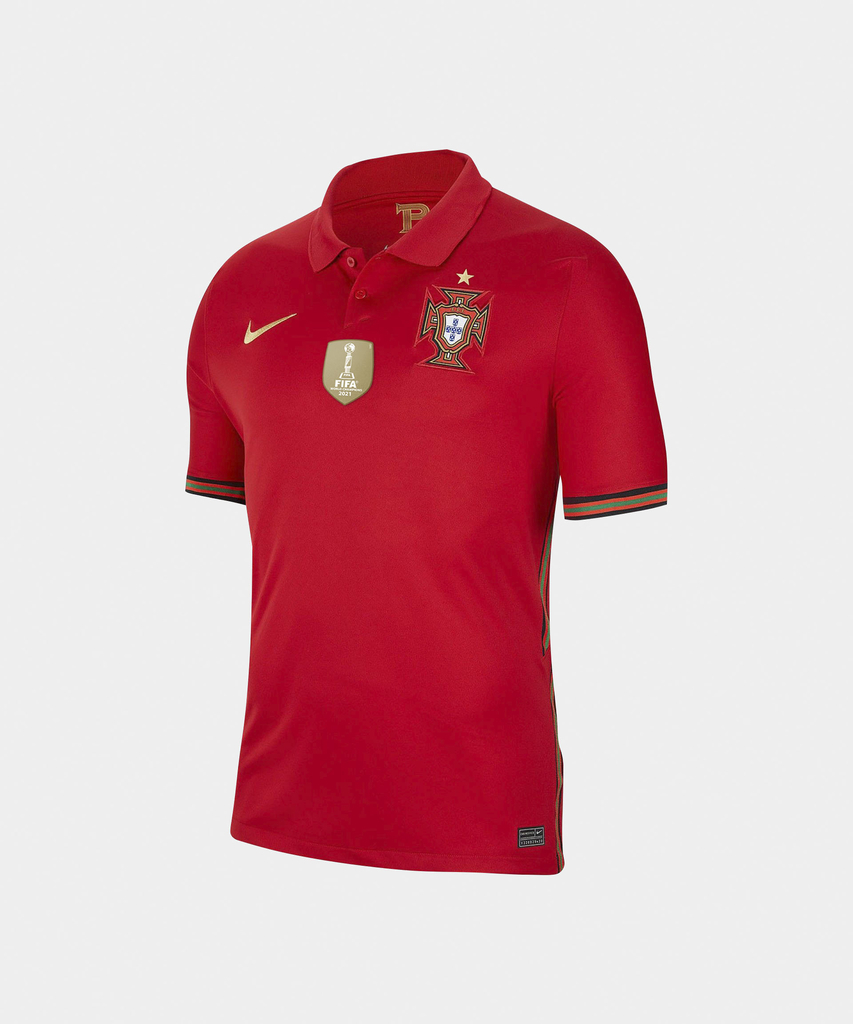
• Netherlands 2022 European Futsal Championship: the perfect "sandwich"
Besides revalidating the title of European Futsal Champion in the championship held in the Netherlands, the Portuguese team managed to become the only European team to win the "European-World-World-European" sequence.
With Jorge Braz once again in charge, but without Ricardinho in his ranks, Portugal took the field with a team full of youth that promised to leave everything on the field. And that is exactly what happened.
After a group stage where they beat Serbia, the Netherlands and Ukraine, the latter in a tighter contest, the Selecção das Quinas entered the knockout phase predisposed to maintain their extraordinary run of games without losing in a European Futsal Championship since 2016.
The first test to invincibility was elegantly overcome despite strong opposition from the surprise team of the competition, Finland. This victory, their ninth consecutive in European finals, was followed by a real battle with Spain in the semi-finals which the emerging genius of Zicky Té settled with just over a minute to go with a goal that would not only seal Portugal's presence in the final, but completed an extraordinary turnaround in the scoreboard after the Spaniards had caught themselves 2-0 up.
The turnaround in the semi-finals had a sequel in the final against Russia. Caught 2-0 down against the Slavs in the 12th minute of the first half, the Portuguese team went deep to find the strength and inspiration that allowed Tomás Paçó, André Coelho (twice) and Pany Varela to help Portugal turn the score around and become two-time European Futsal Champions.
Third consecutive title for Portugal, third gold medal for coach Jorge Braz and the third Best Player of the tournament trophy for a Portuguese player, this time Zicky Té.