

Your cart is currently empty.
Discover our products.
27 February 2023
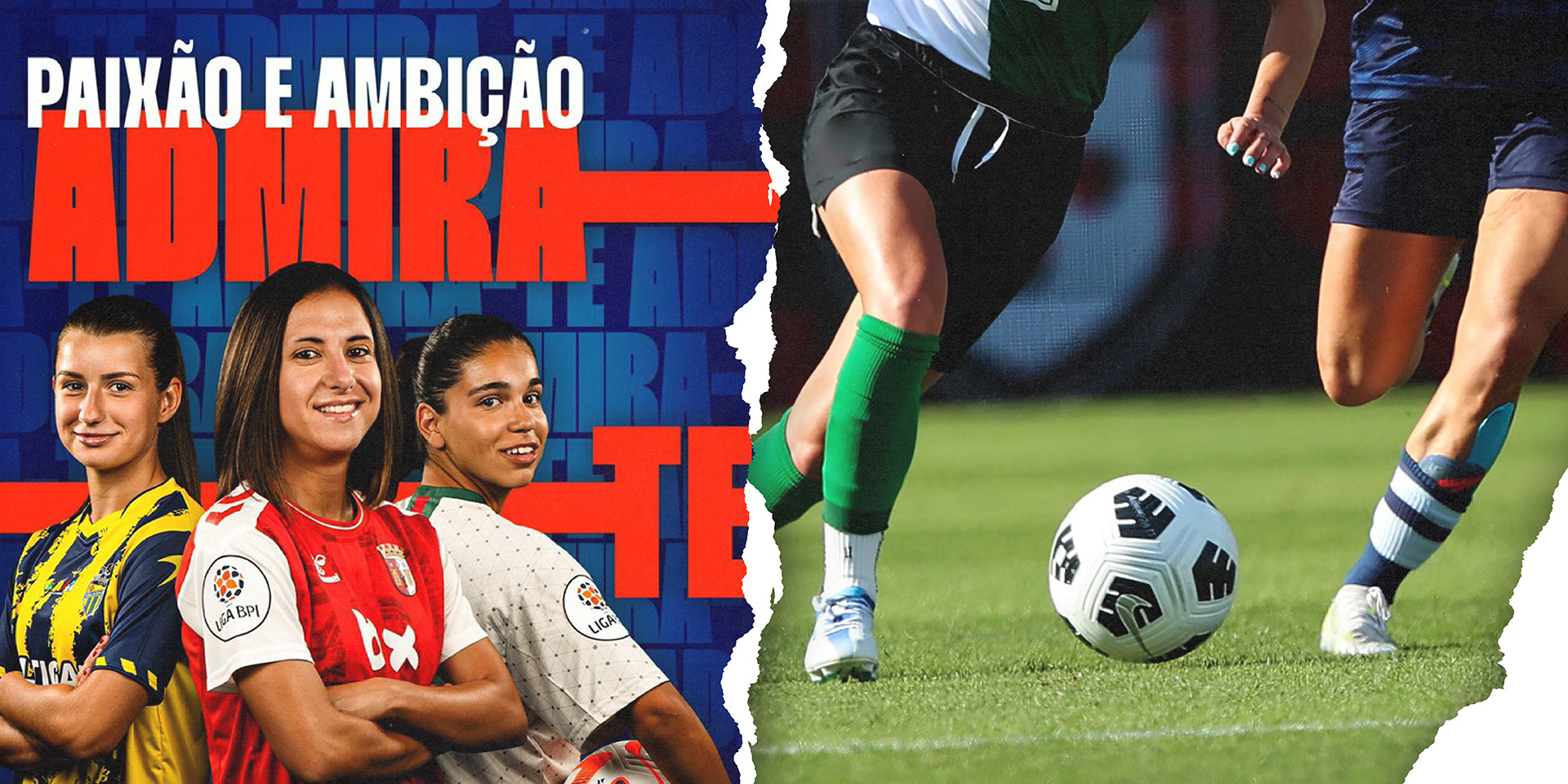
The BPI League is the main women’s football competition in Portugal and, in recent years, it has become the driving force behind the growth of the sport in the country.
The professionalization of the league, the entry of major clubs, and the investment from the Portuguese Football Federation have brought new visibility to women’s football, allowing national players to shine both in Portugal and on international stages.
But how did BPI League come about? What were the first steps of women’s football in Portugal? How does the competition work today? And what impact has it had on the evolution of the national team? Let’s answer all these questions.
The Portuguese women’s national team was created in 1981, when it played its first preparation match against France, in Le Mans. However, at that time, there was still no structured national league, only district tournaments and competitions.
All players on the national team therefore came from regional amateur clubs. A solid competitive foundation was still missing to truly develop the sport.
In 1985, the Portuguese Football Federation created the Women’s National Cup, considered the “mother” of women’s competitions in Portugal.
- The tournament was played in a knockout format, divided into three zones: North, Center, and South.
- It featured 17 participating teams.
- Boavista FC completely dominated the competition, winning it for eight consecutive seasons.
This model worked in a similar way to today’s Portuguese Cup in men’s football.
In the 1992/93 season, the National Cup was replaced by the Women’s National Championship. Despite the change in format, the dominance remained: Boavista once again won in the first years, until being dethroned by ADC Lobão in 1995/96.
This new championship was an important step toward consolidating women’s football, even if it was still far from the professionalization we know today.
The major turning point came in the 2016/17 season, when the Portuguese Football Federation invited top-division men’s clubs to also create women’s teams.
A new competitive format was then introduced, with 14 teams competing in a round-robin league system. The tournament was named the Allianz Women’s Football League, thanks to the sponsor.
The following year, 2017/18, the number of teams was reduced to 12. Finally, since the 2018/19 season, the competition has been known as the BPI League, as a result of a sponsorship agreement with the Portuguese bank BPI.
Currently, BPI League consists of 16 teams, divided into two stages:
- Teams are split into two series: North and South (Madeira’s teams are included in the South series).
- Each team plays once against all the others in its series.
- The top four in each series qualify for the championship phase, while the remaining teams go to the relegation group.
- The eight teams in the championship phase play each other twice.
- The team finishing first is crowned national champion.
- The champion earns a spot in the UEFA Women’s Champions League.
The BPI League has become essential for the growth and affirmation of women’s football in Portugal because it:
Creates a professionalized competition that attracts both national and international talent.
Provides media visibility, with television broadcasts and press coverage.
Serves as a gateway to the National Team, allowing players to showcase their skills.
Offers opportunities for competitive growth, including the chance to play in European competitions.
The growth of women’s football in Portugal has been supported by sponsors, the Portuguese Football Federation, and the Portuguese public.
Investment in infrastructure and youth academies has increased, allowing new generations of players to develop.
Fan enthusiasm has grown, with more people attending matches and following games on television.
The involvement of major Portuguese clubs such as Benfica, Sporting, and Braga has raised the competitive level and attracted additional talent.
The BPI League today is much more than just a league: it is the foundation of the evolution of women’s football in Portugal. From the first district tournaments in the 1980s to the professionalization of the past decade, the sport has come a long way.
Thanks to BPI League, Portugal now has an organized, well-sponsored, and internationally recognized competition, giving players the opportunity to compete at the highest level and dream of major achievements.
The impact is already visible in the Portuguese women’s national team, which qualified for the 2023 World Cup for the first time and promises to keep growing in the coming years.
The future looks bright: with continued investment, new talents emerging, and increased visibility, the BPI League will remain the driving force propelling Portuguese women’s football to new heights.