


Discover the Most Important Football Stadiums in Portugal
Discover Portugal's most iconic stadiums, their stories and unforgettable moments. Explore the temples of Portuguese football now! Read the article!

Although it is within the four lines of a pitch that a team's fate is decided, it is in the stands where emotion and heartbreak collide in the body of the supporter. The stadium is, in this sense, a true Greek theatre where the greatest tragedies — and sometimes the most ironic comedies — that football can offer are played out.
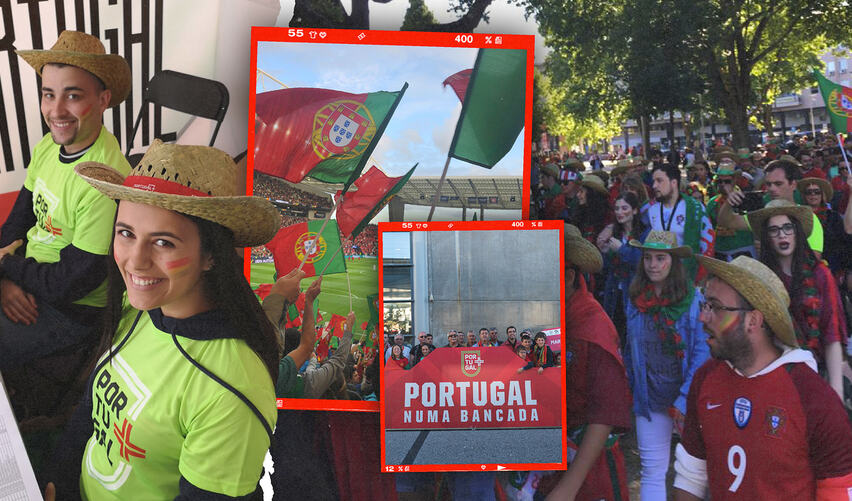
It is easy to rewind the tape and recall with nostalgia that Portugal vs Republic of Ireland match in 1995, when the nation's team reconciled itself with history. On that day, more than 71,000 spectators dressed in red and green cheered, suffered and celebrated qualification for Euro 96.
Fortunately, Portugal's stadiums are rich in stories like this one, which we will now unveil.
Portugal's main stadiums and the stories that turned them into football temples
From Largo da Achada in Camacha, Madeira — the place where Portugal's first ever football match is said to have been played in 1875 — to the comfortable and technologically advanced stadiums of the 21st century, history is full of landmark moments.
The Estádio Nacional: home of Portuguese football
Inaugurated on 10 June 1944, the Estádio Nacional was born out of the need to provide Portugal with a world-class venue. In the opening match, Sporting and Benfica contested the Taça Império and the Taça Estádio, with Sporting winning 3-2.
As the national team's official home, the Jamor witnessed nights of glory, but it is as the stage for the showpiece cup final that it earned a special place in supporters' hearts. This is where the annual "Cup celebration" takes place. The stadium is also revered by Celtic supporters, who won the European Cup there in 1967.
Estádio da Luz: where dreams come true
The Estádio da Luz — both old and new — is the stage where dreams become reality. The old stadium, which once held 120,000 people, witnessed the genius of Chalana helping Portugal qualify for Euro 84, and Rui Costa opening the door to Euro 96.
The new "Cathedral" hosted the Champions League finals of 2014 and 2020 and has been the favoured backdrop for Portugal's victorious campaigns on the road to major tournaments.
Estádio de Alvalade: a nest of champions
Opened in 1956, the old Alvalade was the first stadium in Portugal to host a televised match (Sporting vs Austria Vienna, in 1958). It was replaced by the new Estádio José Alvalade for Euro 2004, the first UEFA five-star stadium in the country. Many still remember Ronaldo and Maniche's masterclasses during that tournament, as well as historic national team thrashings of Russia and Belgium.
Estádio das Antas/Dragão: the stronghold of Portuguese football
FC Porto set up home at Antas in 1952, turning the ground into a fortress. European titles and intercontinental victories were celebrated there. With the move to the Estádio do Dragão, the intensity rose further: it was here that Portugal won the inaugural Nations League in 2019.
The Dragão has also been the stage for historic moments in women's football. On 23 February 2024, the national attendance record for the women's game was set, with 40,189 spectators watching Portugal vs Czech Republic.
Top 10 largest stadiums in Portugal by capacity
Today, stadium capacities have been reduced in favour of comfort. The current ranking is as follows:
- Estádio da Luz: 65,592 spectators;
- Estádio José Alvalade: 50,095 spectators;
- Estádio do Dragão: 50,033 spectators;
- Estádio Nacional: 37,593 spectators;
- Estádio Municipal de Aveiro: 32,830 spectators;
- Estádio Algarve: 30,305 spectators;
- Estádio Municipal de Braga: 30,286 spectators;
- Estádio D. Afonso Henriques: 30,029 spectators;
- Estádio Cidade de Coimbra: 29,622 spectators;
- Estádio do Bessa séc. XXI: 28,263 spectators.
A future World Cup!
Luz, Alvalade and Dragão will be Portugal's three host venues for the 2030 World Cup, which Portugal will co-host with Spain and Morocco. These stadiums will be the stage where thousands of scarves, flags and national team kits welcome the world's best on their journey towards the most coveted title in football.
Want to find out more about the history of our football? Visit our Editorial for more exclusive content!